
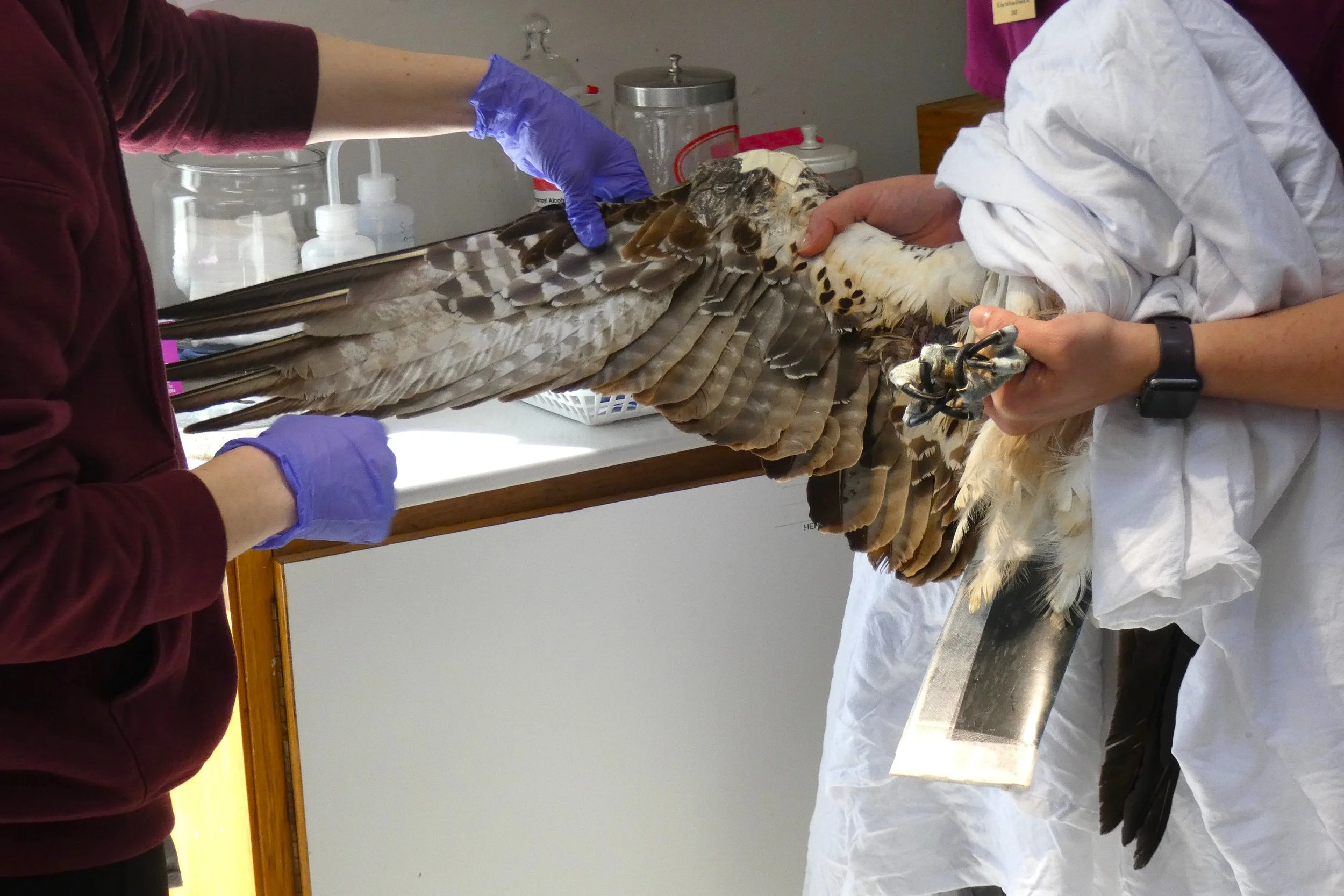
Get Help For A Bird
If you have found an injured bird, you may bring them to our facility for care any day of the week between 9 AM and 5 PM. We are open 365 days a year. Holiday hours may vary.
Our address is 170 Possum Hollow Road, Newark, DE 19711.
If you need assistance with or have a question about an injured bird, please call 302-737-9543 and follow the prompts as directed. If AFTER following the prompts you are unable to reach a live person, you may leave a message on x103. Please note that this is the ONLY voicemail checked regularly regarding injured or orphaned wild, native birds. We will return your call as soon as we can.
Thank you.
Frequently Asked Questions
-
If you have found a wild bird that is injured, wet, cold, or obviously orphaned, you will want to prepare a transport carrier, safely capture the bird, and then bring them to a licensed wildlife rehabilitator. Please do not feed or give liquids to the injured bird.
If you find a bird on the ground during the spring or summer months that does not have obvious injuries or is hopping around, they may be a healthy baby. Please see “Could this bird be a baby? Does it need Help?” below for more information.
If you find an injured owl or hawk, or other raptor, approach these animals with great caution. Their talons and beaks can be dangerous, even if the animal is injured! Be sure to securely place an injured raptor in a closed box with air holes or in a pet carrier for their safety and yours. Call your local wildlife rehabilitator, animal control, or State wildlife agency for guidance, if needed.
Tri-State has only a small number of volunteers who are able to go out on retrieval calls. We assist as much as our resources allow, but we rely on concerned citizens to bring injured wild birds to us for treatment.
-
It is normal to see young birds on the ground between the months of April and September. During this time, many healthy young birds are removed from the care of their natural parents by well-intended individuals. If you see a bird hopping on the ground without obvious injury, see the following guides to help determine if the bird needs intervention. If you are unsure, please call your local rehabilitator for help.
-
Yes!
If you have found an injured native bird, you must get them to a wildlife rehabilitator immediately. Although it may be tempting to try to raise or help the bird yourself, caring for birds requires special skills, equipment, and housing. It is also against the law for you to do so. Just as veterinarians are professionally trained to give medical treatment to cats and dogs, wildlife rehabilitators are specially trained to care for wild animals. Broken bones and traumatic injuries or diseases require veterinary care. Tri-State’s Wild Bird Clinic has full-time wildlife veterinarians on staff and is fully licensed to legally care for and treat wild birds. We have 50 years of experience in proper husbandry and medical treatments for wild native birds.
While it may be done with good intentions, providing medical care for an injured animal outside of a licensed facility will often make the animal’s condition worse. The only way for a wild animal to get the proper medical treatment they need is to bring them to a licensed and trained rehabilitator.
It is against the law in the United States, Canada, Europe, and Mexico for anyone who is not a licensed Wildlife Rehabilitator, educator, or falconer to possess wild native birds. Wild native birds are protected under federal law and require a federal permit to possess.
Please note: We are not a facility for domestic, exotic, or non-native species. Please contact your local veterinarian or animal shelter for help regarding these species.
-
If you have an animal trapped on a sticky trap or glue trap, please DO NOT attempt to remove them. Pulling an animal off these traps can cause severe injuries (broken bones, dislocated joints, permanent feather damage) or even death. Place tissues or paper towels on any exposed sticky surfaces to prevent the animal from becoming more stuck and take the animal to Tri-State or your nearest wildlife rehabilitator.
-
DO NOT attempt to clean the bird! Keep the bird warm and call Tri-State at 302-737-9543 or your local wildlife rehabilitator immediately. If you find oiled reptiles or mammals, Tri-State is also able to accept and assist them at our facility.
-
Maryland: Wildlife Rehabilitators
Pennsylvania: https://pawr.com/
New Jersey: NJDEP Locate a Licensed Wildlife Rehabilitator in New Jersey
Delaware: https://dnrec.alpha.delaware.gov/fish-wildlife/
In other regions of the country, to find out where the nearest Wildlife Rehabilitator is located, contact your state Division of Natural Resources or Fish and Wildlife. The U.S. Fish & Wildlife Service (in Canada contact the Canadian Wildlife Service, part of Environment Canada) may also have a regional office in your area. You can also call the National Wildlife Rehabilitator’s Association (NWRA) Head Office in St. Cloud, Minnesota at (320) 230-9920. NWRA has members in every state and parts of Canada and Europe. Your local SPCA, Humane Society, veterinarian, or police station may also be able to assist you.
Another resource is wildliferehabber.org. Tri-State is not affiliated with wildliferehabber.org or any of the websites listed and does not guarantee the listings to be accurate or the rehabilitators contained within to be licensed. Licensing requirements vary by state.
For instructions on other species, please contact your local wildlife rehabilitator or local Fish & Wildlife agency.
It is against the law in the United States, Canada, Europe, and Mexico for anyone who is not a licensed Wildlife Rehabilitator, educator, or falconer to possess native wildlife.
-
To make the best use of our resources in accordance with our mission, we only take in injured, orphaned and oiled native wildlife. This allows us to focus on providing the best possible care to wild native birds in need. It is important to know that we made this decision based on the responsibility to our environment, hospital resources, and staff hours. It is not a decision we made lightly and the life of any animal should be respected and handled with care.
We are not able to rehabilitate non-native, exotic, or domestic birds. We cannot provide domestic or exotic placement services. We are not able to hatch or care for eggs. If you need assistance for a domestic, exotic, or non-native species, please contact your local veterinarian or animal shelter.
It can be difficult to identify a wild non-native bird from a native one, especially when they are young. If you are unsure, we can help with identification. Please see below for some common non-native, exotic, or domestic species. For more information on invasive species, visit https://www.nwf.org/Educational-Resources/Wildlife-Guide/Threats-to-Wildlife/Invasive-Species.
-
We are always looking for volunteer support! If you would like to help us send wild birds back to their natural environments, please click here for more info.
-
We are happy to help with a consult! Email us at OilPrograms@tristatebird.org or give us a call at (302) 737-9543 ext. 121.
Common Non-native or Domestic Species
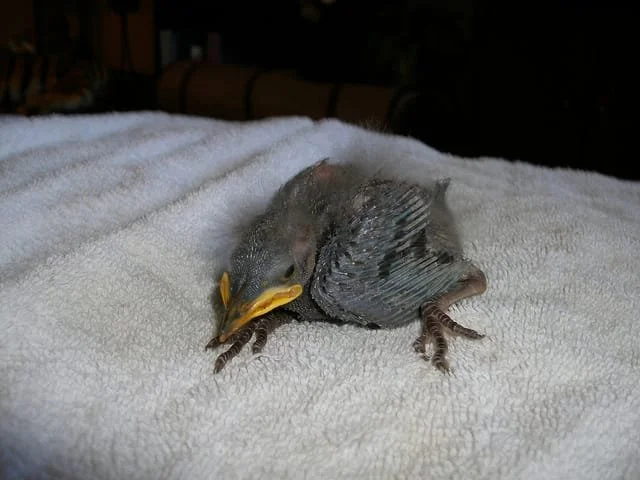
European Starling
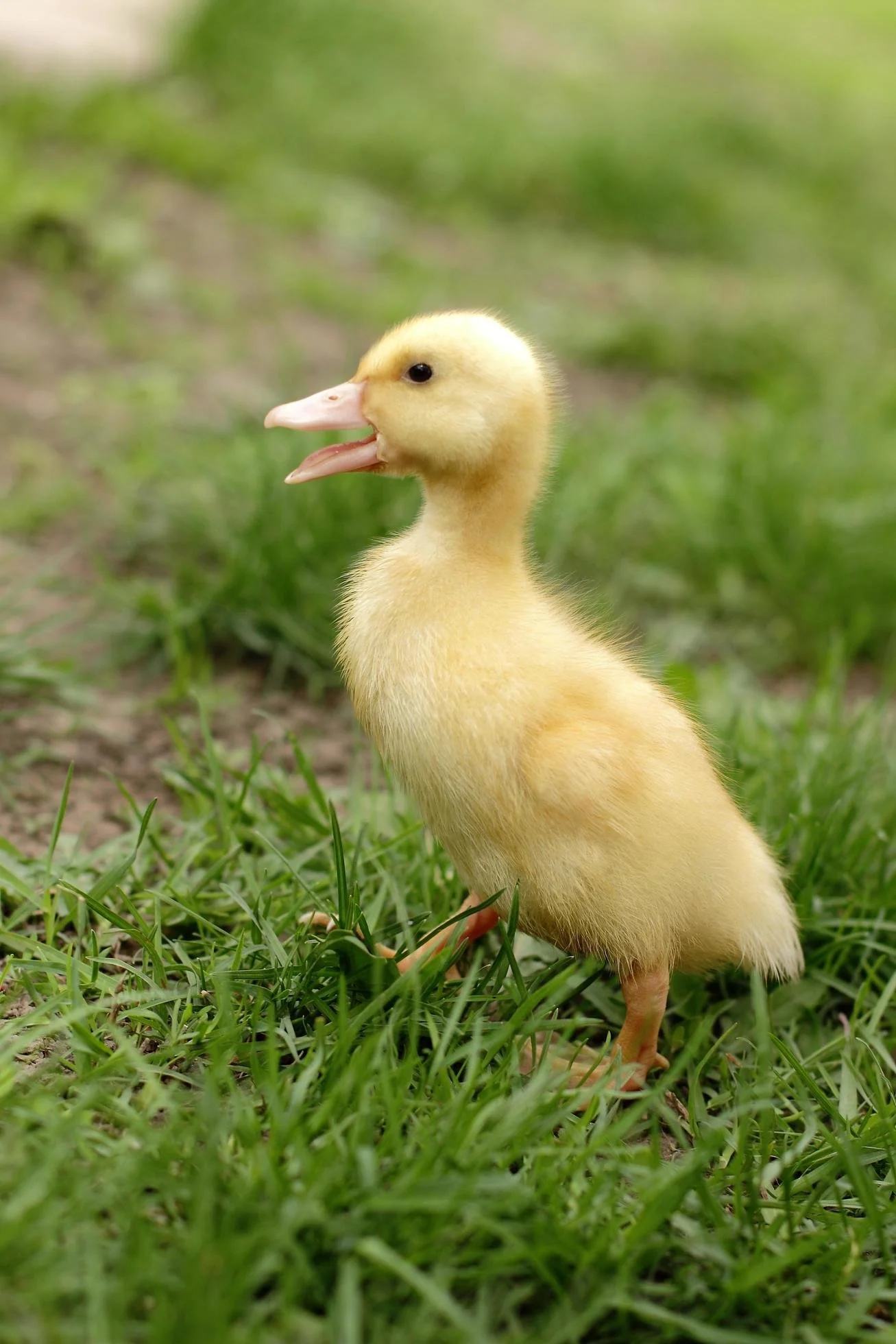
Domestic Duck
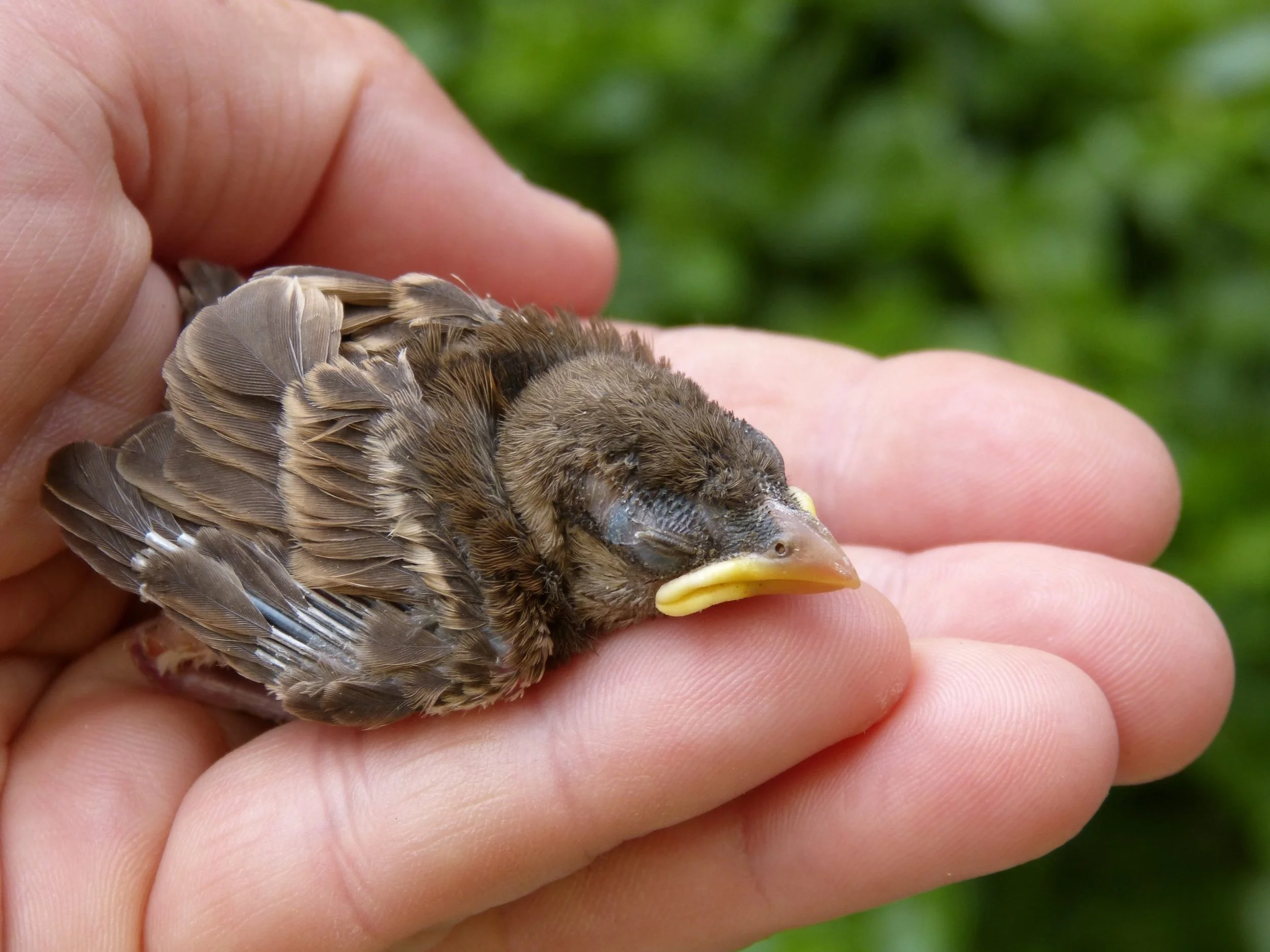
House Sparrow