New Nest, New Beginning
Young raptors thrive when raised in the wild by families of their own species, whether biological or foster. Before renesting was explored at Tri-State, young birds that fell from the nest or lost their parents had few options. Even with expert care, hand‑rearing can’t fully replicate the lessons wild parents teach—the subtle cues of flight, the timing of a dive, the patience of a hunter. Our team realized that the best teacher for a young bird is an adult of the same species. So we built partnerships with wildlife agencies, arborists, and volunteers who could help locate suitable foster nests and safely return baby birds to the wild.
In 2002, our raptor renesting team became an official program dedicated to giving baby birds the best chance at survival. Since then, we’ve successfully paired hundreds of chicks with foster parents, allowing them to grow and learn in their natural environment.
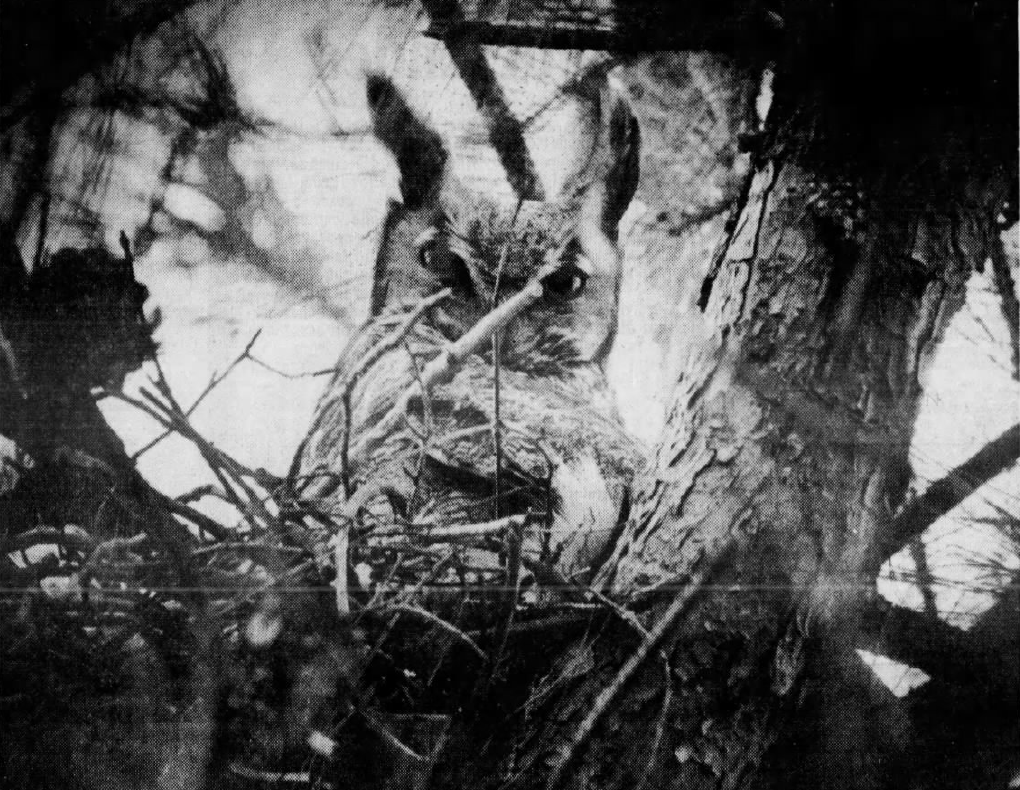
A Great Horned Owl renested in 1986…
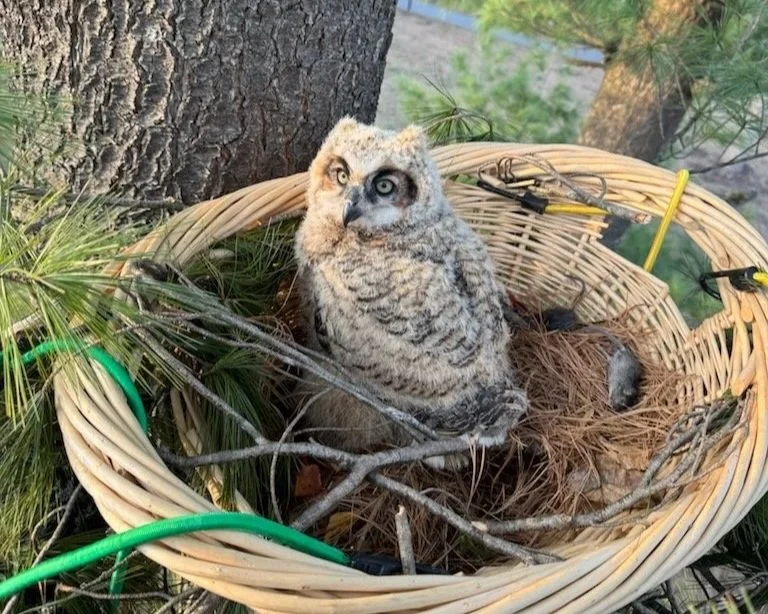
and a Great Horned Owl renested in 2026!
Although raptors were being renested at Tri‑State long before the program was formalized, those early efforts were carried out case by case, relying on staff expertise, opportunity, and available partners. As our understanding grew—and as more young birds arrived needing placement—we recognized the importance of making renesting a consistent part of our rehabilitation process. Today, all juvenile raptors, as well as songbirds and waterfowl, are evaluated for renesting when appropriate.
The program’s success is thanks to teamwork and timing. When a call comes in about a fallen nestling, our staff immediately identifies the species, assesses their health, and works to locate a suitable new family. As soon as the following day, that bird could be sitting in a new nest, waiting on the next meal from their parents.
This isn’t just a win for the individual reunited birds, however. With several populations in decline, like the American Kestrel, the ability to foster and return young birds to the wild is more important now than ever. Each new life added to a wild family, especially when the species is struggling, is a victory for conservation efforts.
Today, Tri‑State’s Raptor Renesting Program serves as proof of compassion and science working hand in hand. Each chick returned to the wild reminds us that even small successes can ripple outward, helping preserve ecological balance for generations to come.